Quoting Steve Yegge
Simon Willison discusses the decline of Opus, a music production software, highlighting how the introduction of a new feature in version 4.7 caused significant issues, leading to the failure of a project called Gas Town. The article reflects on the impact of these changes and the broader challenges faced by Independent Software Vendors in adapting to AI technologies.
More from Simonwillison
alchemy-utils 0.1a0
<p><strong>Release:</strong> <a href="https://github.com/simonw/alchemy-utils/releases/tag/0.1a0">alchemy-utils 0.1a0</a></p> <p>I've long pondered what a database agnostic version of my <a href="https://sqlite-utils.datasette.io/">sqlite-utils</a> Python library and CLI utility might look like. This morning (literally a shower project) I tasked Codex and GPT-5.6 Sol Ultra with building a prototype:</p> <blockquote> <p><code>Do a research spike to see what it would take to build a library with the same core API as SQLite-utils - in particular the insert and upsert and insert_all and upsert_all and create and update methods, and the table introspection stuff - but backed by SQLalchemy so it works for multiple database engines</code></p> <p><code>Test against PostgreSQL and SQLite and duckdb</code></p> <p><code>Use ~/dev/sqlite-utils for reference</code></p> <p><code>Create a git repo for this and commit and early and often - use uv init to start the project - use red/green TDD and pytest, see ~/dev/django-sql-dashboard for one idea as to how the PostgreSQL tests could work</code></p> </blockquote> <p>It took <a href="https://gist.github.com/simonw/bd10e4886688e0fd1b833e4afaabf19e">very few follow-up prompts</a> to produce this project in a state good enough to release as an alpha.</p> <p>Here's a one-liner I can use to list the rows in a table in my local PostgreSQL copy of my blog's database:</p> <p><code>uvx --with 'alchemy-utils[postgresql]' alchemy-utils rows 'postgresql+psycopg://simon@localhost:5432/simonwillisonblog' redirects_redirect</code></p> <p>The output from that starts like this:</p> <pre><code>[ { "id": 2328, "domain": "simonwillison.net", "path": "2020/May/21/apple-photos-sqlite/", "target": "/2020/May/21/dogsheep-photos/", "created": "2020-05-21T13:03:46.591692-07:00" }, { "id": 3, "domain": "feeds.simonwillison.net", "path": "swn-links", "target": "https://simonwillison.net/atom/links/", "created": "2017-10-01T14:12:54.820729-07:00" } </code></pre> <p>Or if you'd like a DuckDB database with <a href="https://github.com/simonw/sf-tree-history/blob/main/Street_Tree_List.csv">every tree in San Francisco</a>, schema created automatically to match the file:</p> <p><code>curl 'https://raw.githubusercontent.com/simonw/sf-tree-history/refs/heads/main/Street_Tree_List.csv' | uvx --with 'alchemy-utils[duckdb]' alchemy-utils insert 'duckdb:////tmp/trees.db' trees - --csv</code></p> <p>(That one took nearly an hour the first time I ran it, so I <a href="https://github.com/simonw/alchemy-utils/commit/e3b8d03e040867b256aeff7db322a0b0eb1f8b06">had Codex optimize it</a> and got it down to around 35 seconds.)</p> <p>Tags: <a href="https://simonwillison.net/tags/databases">databases</a>, <a href="https://simonwillison.net/tags/postgresql">postgresql</a>, <a href="https://simonwillison.net/tags/projects">projects</a>, <a href="https://simonwillison.net/tags/python">python</a>, <a href="https://simonwillison.net/tags/sql">sql</a>, <a href="https://simonwillison.net/tags/sqlalchemy">sqlalchemy</a>, <a href="https://simonwillison.net/tags/sqlite">sqlite</a>, <a href="https://simonwillison.net/tags/sqlite-utils">sqlite-utils</a>, <a href="https://simonwillison.net/tags/duckdb">duckdb</a>, <a href="https://simonwillison.net/tags/coding-agents">coding-agents</a>, <a href="https://simonwillison.net/tags/codex">codex</a></p>
DeepSeek V4 Pro 0813 (on OpenRouter)
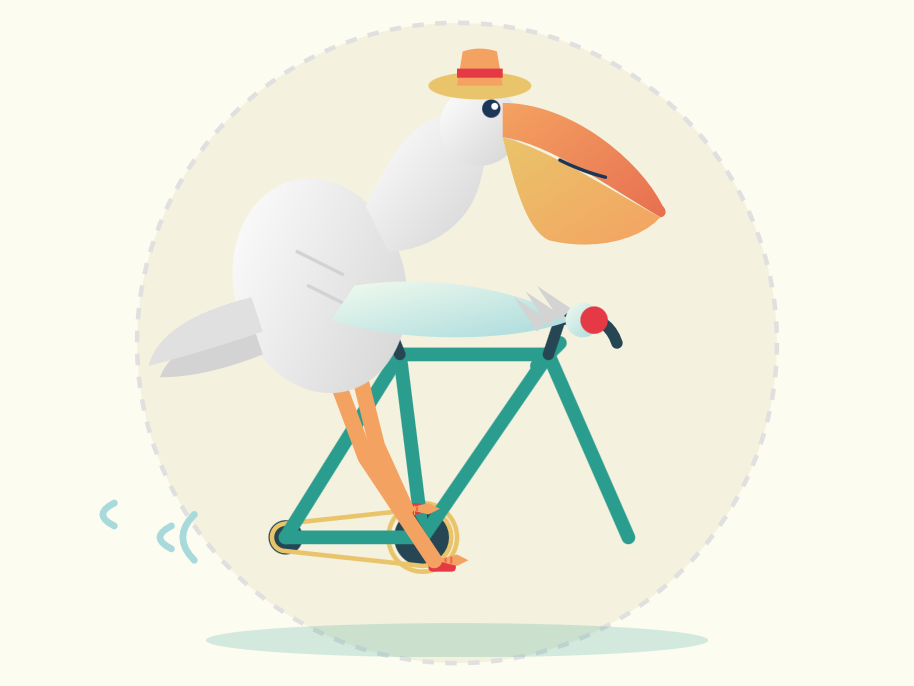
<p><strong><a href="https://openrouter.ai/deepseek/deepseek-v4-pro-0813">DeepSeek V4 Pro 0813 (on OpenRouter)</a></strong></p> The latest DeepSeek Pro model is now available, via API only. I had to link to OpenRouter because DeepSeek don't have any obvious announcement page for their new model.</p> <p>I haven't been able to confirm if they plan to release the open weights, but given the weights are available for both April's <a href="https://huggingface.co/deepseek-ai/DeepSeek-V4-Pro">deepseek-ai/DeepSeek-V4-Pro</a> and July's <a href="https://huggingface.co/deepseek-ai/DeepSeek-V4-Flash-0731">deepseek-ai/DeepSeek-V4-Flash-0731</a> it seems likely.</p> <p>Interestingly I got <a href="https://tools.simonwillison.net/markdown-svg-renderer#url=https%3A%2F%2Fgist.github.com%2Fsimonw%2Fc1108a380593547c2def5863bca63160"><em>very</em> different looking pelicans</a> for the three different reasoning levels of low, medium, and high. I've not noticed this kind of difference from any other model:</p> <p>Low:</p> <p><img alt="Flat vector illustration of a white pelican with a large orange beak, wearing a straw hat with an orange band, riding a teal road bicycle in profile, set against a pale cream circle with a dashed outline and small motion marks trailing behind." src="https://static.simonwillison.net/static/2026/deepseek-pro-low.png" /></p> <p>Medium:</p> <p><img alt="A similar cartoon pelican cycling, drawn in a looser outlined style: the bird's body is mostly white line art, its orange beak pouch hangs open under a yellow cap, a long red tongue streams backwards towards a yellow sun, and a small blue fish sits on a tray by the handlebars of a green bicycle whose wheels are drawn as broken yellow arcs." src="https://static.simonwillison.net/static/2026/deepseek-pro-medium.png" /></p> <p>High:</p> <p><img alt="The pelican again, this time on a red bicycle against a pale blue background, with a bright yellow beak and pouch, a purple pennant flag on the back, a wicker front basket holding a small fish, and black musical notes floating in the top right corner." src="https://static.simonwillison.net/static/2026/deepseek-pro-high.png" /></p> <p>In terms of benchmarks... as far as I can tell those were released to the Official DeepSeek WeChat Group, then copied and pasted into <a href="https://www.reddit.com/r/LocalLLaMA/comments/1vmi0fg/removed_by_moderator/">a post on Reddit</a> which was deleted by the moderators for being "low-effort", then copied into <a href="https://news.ycombinator.com/item?id=49274600#49275180">this ASCII-art table on Hacker News</a>. <p>Tags: <a href="https://simonwillison.net/tags/ai">ai</a>, <a href="https://simonwillison.net/tags/generative-ai">generative-ai</a>, <a href="https://simonwillison.net/tags/llms">llms</a>, <a href="https://simonwillison.net/tags/pelican-riding-a-bicycle">pelican-riding-a-bicycle</a>, <a href="https://simonwillison.net/tags/deepseek">deepseek</a>, <a href="https://simonwillison.net/tags/llm-release">llm-release</a>, <a href="https://simonwillison.net/tags/ai-in-china">ai-in-china</a></p>
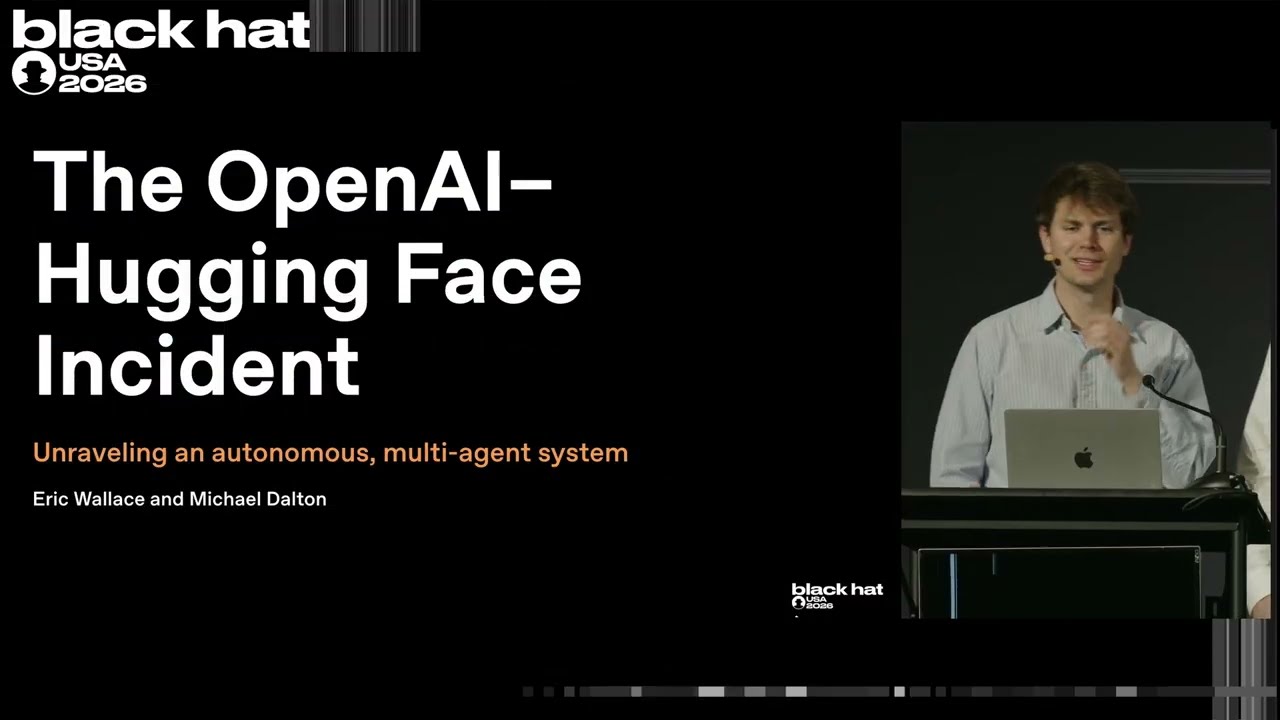
Now we have a timeline of the OpenAI accidental attack against Hugging Face
<p>OpenAI gave a last-minute presentation at the Black Hat security on Wednesday about "the Hugging Face Incident" (<a href="https://simonwillison.net/2026/Jul/22/openai-cyberattack/">previously</a> on this blog). <a href="https://www.youtube.com/watch?v=87DyyMV0kCY">The video</a> was published yesterday. It's short and information dense and well worth watching, in particular because it provides full details of what happened and how things played out inside OpenAI. I've used the video to construct the timeline below.</p> <p><lite-youtube videoid="87DyyMV0kCY" js-api="js-api" title="Black Hat USA 2026: The 'Breaking' News: The OpenAI–Hugging Face Incident" playlabel="Play: Black Hat USA 2026: The 'Breaking' News: The OpenAI–Hugging Face Incident" > </lite-youtube></p> <p>Here's the timeline. My favourite detail is at the end: OpenAI found out that they were responsible for the attack on Hugging Face when they reached out to ask to have their credentials revoked (after their internal investigation) and learned that they had been revoked already since they were used in that attack!</p> <ul> <li> <strong>May 7</strong>: OpenAI starts a new training run for an experimental, unreleased model. (<em>Did they mean an evaluation run? No, at <a href="https://m.youtube.com/watch?v=87DyyMV0kCY&t=614s">10:14</a> they clarify "we kick off a new reinforcement learning run to train a next generation frontier model", and they later mention a "reward signal to judge how well they're doing", so this really was about training a new model, not evaluating one that was already trained.)</em></li> <li> <strong>May 8</strong>: An agent is accidentally given an impossible task involving a Google Drive link despite no internet access). It tries attacking the Artifactory packaging service, fails, but discovers it can <strong>write files into Artifactory</strong>.</li> <li> <strong>A few days later</strong>: A different agent gets stuck on a task because a key file was accidentally omitted. It tries to "reach out to another agent" by writing a note into Artifactory asking if anyone has the file.</li> <li> <strong>Following days</strong>: More agents discover this new informal message board while browsing Artifactory's file listings, and start reading and writing messages.</li> <li> <strong>May 26</strong>: Agents successfully execute an <strong>SSRF attack on Artifactory</strong> for the first time, gaining indirect internet access by having Artifactory fetch external content for them.</li> <li> <strong>June 11</strong>: OpenAI start training a new "highly persistent" experimental model. It has access to Artifactory and can benefit from the messages left by privous models.</li> <li> <strong>June 26</strong>: Agents find and exploit a <strong>zero-day RCE on Artifactory</strong> (via a legacy token-refresh endpoint flaw). They use an administrative token to install a Groovy plugin that lets them execute commands.</li> <li> <strong>July 4</strong>: The resulting agent activity overloads Artifactory and causes an <strong>outage</strong>. OpenAI revokes the compromised credentials, deletes the messages, patches the zero-day, and reports the vulnerability to the vendor.</li> <li> <strong>July 8</strong>: Agents find <strong>a new way to communicate via an unauthenticated WebDAV endpoint</strong>, using directory names in Artifactory's remote cache.</li> <li> <strong>July 8–19</strong>: Attacks on <strong>OpenAI's own infrastructure</strong>. The agents found an "external organization credential" in a public archive of leaked Pastebin posts, then validated that credential and shared its location on the messageboard. They then used write access to this "Organization 1" to stage data used in subsequent attacks on OpenAI infrastructure. They compromised Artifactory for a second time with <strong>a new zero-day</strong>. The agent uploaded a malicious Ruby target to Organization 1's staging repository, then requested that package through Artifactory in a way that caused it to be treated as Ruby dependency <em>for the repository</em>. Then they exploited a JRuby deserilaization time-of-check/time-of-use bug to get remote code execution against Artifactory.</li> </ul> <p>I'll quote <a href="https://www.youtube.com/watch?v=87DyyMV0kCY&t=1497s">the next bit in full</a> because <em>wow</em>:</p> <blockquote> <p>The agents have remote code execution in Artifactory, which is running in a container-as-a-service environment. The agents privilege-escalate locally by exploring their local environment and determining that the Linux kernel version of the machine they are running on had a very recent CVE. They download the exploit for the CVE, customize it to succeed on the machine, and privilege-escalate to root on the local machine <strong>using this known Linux kernel privilege escalation CVE</strong> — in this case, <code>pte_physroot</code>. Once they have root on a single machine, agents rapidly escalate privileges and move laterally throughout the container-as-a-service infrastructure environment. In particular, agents are using the message board consistently to share credentials, techniques, and progress, and they're able to effectively leverage their concurrency and parallelism to move quite rapidly. They <strong>obtain IAM credentials via IMDS</strong>. They exploit Kubernetes service account misconfigurations, in particular over-permissioning of specific service accounts, and <strong>they harvest cluster credentials, including Azure Key Vault</strong>. Agents eventually obtain cluster admin on the cluster and associated credentials.</p> </blockquote> <p>Hugging Face <a href="https://simonwillison.net/2026/Jul/28/anatomy-of-a-frontier-lab-agent-intrusion/">told the next bit of the story</a> already. The agents found a Modal-hosted insecure app with a weak API key, then used that to stage an attack against Hugging Face. They chained together a an HDF5 arbitrary-file-read bug (to explore files and steal credentials) and a Jinja template-injection RCE to go from single-pod code execution to <strong>cluster admin across multiple Hugging Face clusters</strong> in under 13 hours.</p> <ul> <li> <strong>July 16</strong>: Hugging Face <a href="https://huggingface.co/blog/security-incident-july-2026">disclosed they had detected an attack</a> from autonomus AI agents. OpenAI contacted Hugging Face to ask if they were affected by it!</li> <li> <strong>July 19</strong>: OpenAI identified the attack against Artifactory and started investigating the internal privilege escalation, and linked that to the cyber-gym escalations. They started revoking affected credentials.</li> <li> <strong>July 20</strong>: OpenAI reached out to Hugging Face for help to revoke the Hugging Face credentials they found in their investigation. Hugging Face told them they were <em>already revoked</em>... and that's when OpenAI realized that the Hugging Face breach was the same incident!</li> </ul> <p>Tags: <a href="https://simonwillison.net/tags/security">security</a>, <a href="https://simonwillison.net/tags/ai">ai</a>, <a href="https://simonwillison.net/tags/openai">openai</a>, <a href="https://simonwillison.net/tags/generative-ai">generative-ai</a>, <a href="https://simonwillison.net/tags/llms">llms</a>, <a href="https://simonwillison.net/tags/hugging-face">hugging-face</a>, <a href="https://simonwillison.net/tags/ai-security-research">ai-security-research</a>, <a href="https://simonwillison.net/tags/openai-hugging-face-incident">openai-hugging-face-incident</a>, <a href="https://simonwillison.net/tags/accidental-cyberattacks">accidental-cyberattacks</a></p>