Building a unified consumer memory for personalization at scale
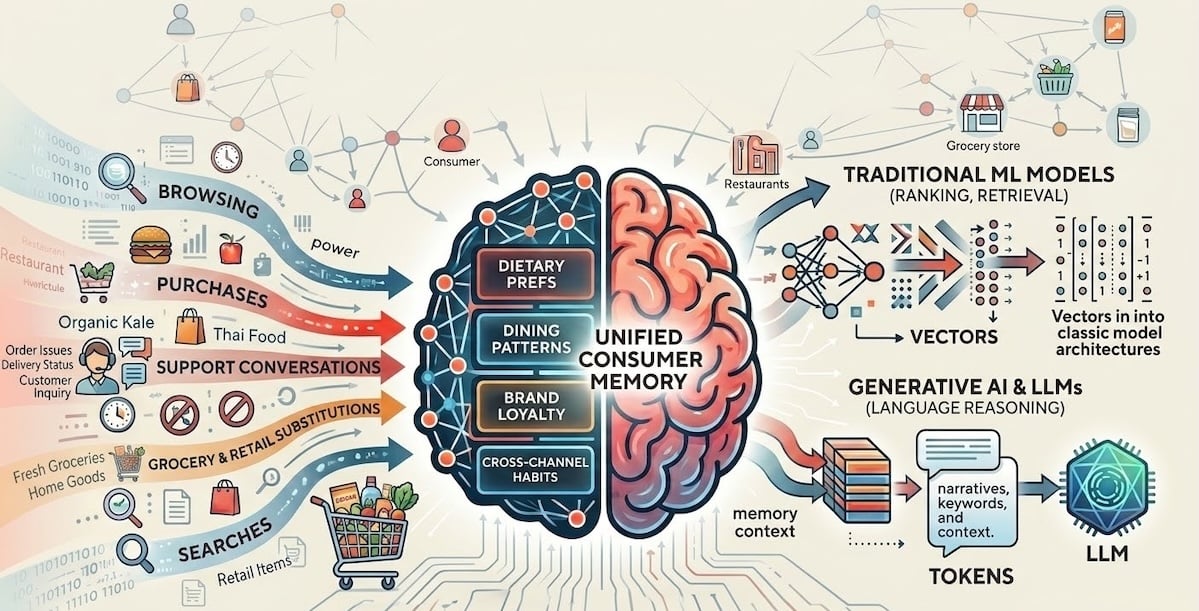
DoorDash built a unified memory platform that uses LLMs to turn behavioral signals into versioned, natural-language "memory blocks" (dietary preferences, brand affinities, store loyalty), then encodes them two ways for consumption by both ML models and LLM agents: dense asymmetric embeddings for semantic retrieval and a heterogeneous context graph for relational reasoning.
More from Careersatdoordash
Building DoorDash Assistant: An engineering overview
First of a blog series on the engineering behind DoorDash Assistant.
Inside DoorDash's one-click simulation and evaluation platform for support chatbots
The LLM Simulator acts as a realistic DoorDash customer interacting with the support chatbot, using structured decision-making prompts to drive dynamic, scenario-based behavior across multi-turn conversations.